
Paris Baguette
Paris Baguette AmericaFood & Drink
4.7906.00 Reviews
- Version
- 3.5
- Installs
- 100.00K
- Age Rating
- Everyone
Screenshots
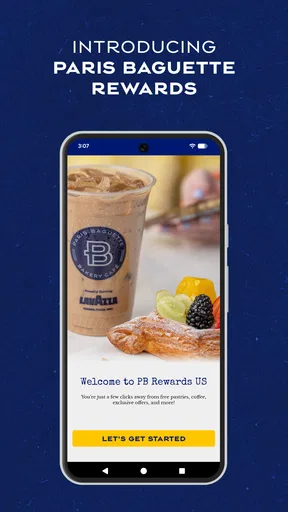
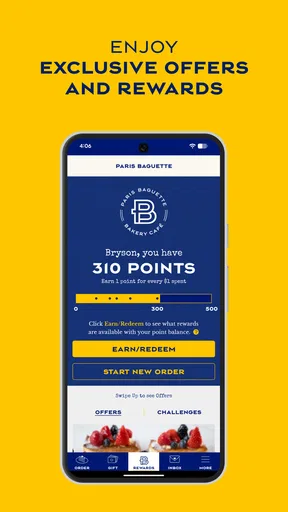
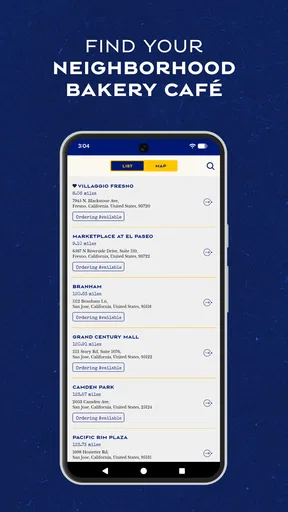
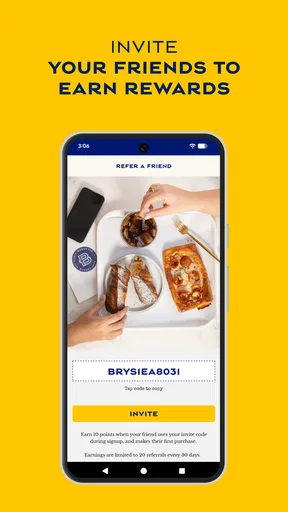
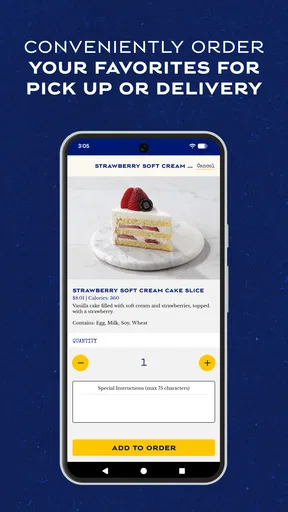
Our Review of Paris Baguette
 Analysis by Appyee
I started looking at Paris Baguette as a practical household app rather than just another place to browse pastries. Developed by Paris Baguette America, this free Food & Drink app is built around the bakery’s rewards and mobile experience, so its value depends on how often you visit, how many people in your household use the same bakery, and whether you prefer planning orders on a phone instead of handling everything at the counter.
My first impression was that it makes the most sense for a regular customer who wants a quicker way to interact with Paris Baguette. It is not a general restaurant-discovery tool, a meal planner, or a broad coupon wallet. Its usefulness is tied to one bakery brand. That narrow focus is also its main strength: when I already know I want something from Paris Baguette, a dedicated app feels more direct than searching through a map app, opening a browser, or relying on a paper receipt.
The app has an average rating of 4.7 from around 6,900 ratings, with more than 900 written reviews, and it has passed 100,000 installs. Those figures suggest that the experience has found a real audience, although they do not change the basic question I would ask before installing it: will I visit Paris Baguette often enough for a dedicated account and mobile routine to be worthwhile?
How Paris Baguette fits into a shared household routine
A realistic use case is a household where one person usually picks up breakfast, another orders a cake or pastry box for a gathering, and everyone has different preferences. In that situation, the app can serve as a shared reference point for deciding what to buy and when to make the visit. I can check the bakery experience from my own phone, discuss the order with someone else, and avoid trying to remember every detail while standing in line.
That does not mean I would automatically put one account on every family member’s phone. A shared login can become confusing when several people are using it at different times. One person may expect to manage the rewards activity, while another may simply want to place an order or check what is available. If your household treats the account as a common wallet, agree in advance who is responsible for keeping the account information current and who handles any account-related messages.
For couples or roommates, the app is most comfortable when one person acts as the primary account holder and the others coordinate informally. I would send a screenshot or message about the intended purchase rather than passing the phone around with the account open. That small habit reduces accidental changes and keeps the person responsible for the account aware of what is happening.
The useful household insight is that convenience comes from coordination, not from pretending the app is a full family-management system. I would use it to support a shared bakery routine, not as a replacement for communication between people. The app can centralize the brand interaction, but it cannot decide who should order, who should collect the food, or whose rewards activity matters most.
One phone, several people, and the account boundary
On a shared device, I would be especially careful about leaving the app open after using it. A family tablet or a phone passed between partners may be convenient, but any account-based app deserves a clear handoff. Before giving the device to someone else, I would finish the current task, review what is on screen, and close the app. That is not a Paris Baguette-specific control; it is simply sensible behavior when one device represents more than one person.
I would also avoid treating a child’s use of the app as equivalent to an adult’s use. The content rating is Everyone, which makes the app broadly suitable from an age-classification perspective, but an Everyone label does not explain how a household should handle purchases, account access, or personal information. An adult should remain involved whenever the app is being used as part of a real purchase or rewards account.
This distinction matters because a young person may be perfectly capable of browsing a bakery menu while not being the right person to manage an account or confirm an order. I would let a child help choose pastries for a family event, then have an adult review the final details. That creates a useful division: the app supports participation, while the adult keeps responsibility for the transaction and the account.
Setting up without overcomplicating the household
Paris Baguette was released on January 7, 2019, and the current version is 3.5. It requires iOS 11 or later. Those details make it relatively approachable for people who are not using the newest Apple hardware, but I would still check the device before planning a household workflow around it. A shared phone that cannot update the app smoothly can turn a simple bakery visit into an avoidable problem.
My preferred setup would be deliberately modest. I would install it on the device used by the adult who visits Paris Baguette most often, create or sign into the account carefully, and then decide whether anyone else really needs direct access. If another household member only needs to help choose an item, there is little reason to duplicate the account across several devices.
That approach also makes troubleshooting easier. When a family shares one account across multiple phones, it becomes harder to tell whether a problem comes from the app, the device, the sign-in state, or a misunderstanding between users. Keeping one primary device gives the household a clear place to check first.
I would pay attention during setup to which person is entering information and which person will receive account-related communication. Even without inventing specific permissions or policies, the general principle is straightforward: the account should belong to an adult who understands how it will be used. If a household changes phones, I would make the transition intentionally rather than allowing several people to keep experimenting with different sign-in details.
Using the app to coordinate bakery visits
The strongest everyday use is planning before leaving home. For a morning pickup, I can decide what the household wants, check the mobile experience, and reduce the amount of discussion needed at the bakery. For a weekend gathering, I would use the app as part of a simple checklist: confirm the order plan, identify who is collecting it, and make sure the person going to the bakery has access to the relevant account or information.
That last step is easy to overlook. The person who chooses the food is not always the person who collects it. If one partner handles the app but another is driving, I would coordinate before leaving rather than assuming the handoff will be obvious. A screenshot or written note can help, but I would not share more account information than necessary.
For shared households, the app works better when it is treated as a planning tool rather than a conversation replacement. I would not expect it to resolve questions such as whether the birthday host wants a specific assortment, whether someone has changed their mind, or whether the pickup time still works for everyone. Those decisions belong in the household conversation; the app is where I would carry out the bakery-related part.
A less obvious trade-off is that a dedicated brand app can make repeat visits feel more organized while also narrowing your attention. If I am already committed to Paris Baguette, that focus is welcome. If I am comparing several nearby bakeries for price, dietary needs, opening times, or broader selection, I would rather use a map or restaurant app that brings alternatives together. Paris Baguette is not the most efficient tool for comparing the whole local market.
Rewards are most useful for consistent customers
The rewards angle is the reason I would keep the app installed instead of using a browser only when I need something. Regular visits give a dedicated rewards experience a better chance of becoming part of my routine. If I stop by only once in a long while, the extra account may not justify the small amount of setup and maintenance involved.
In a household, rewards introduce a practical question: should activity be concentrated under one person or kept separate? I would choose based on how the household actually buys. If one adult usually pays and collects orders for everyone, a primary account is simpler. If two adults visit independently and want clear personal control, separate use may be less confusing. The important point is to decide before people start assuming that every purchase is being tracked in the same place.
I would not promise myself that rewards alone will make every purchase worthwhile. A reward program is valuable only when it fits purchases I already intended to make. If the app encourages me to buy extra food merely to chase a benefit, the convenience becomes less meaningful. My recommendation is to view the rewards feature as a bonus for normal Paris Baguette visits, not as a reason to change the household budget.
What the app is like for different ages
Because the content rating is Everyone, I would feel comfortable letting a child look through the bakery experience with an adult nearby. The interface is connected to a familiar food purchase, so it can even be a nice way for children to help choose treats for a family breakfast or celebration. Still, age suitability and purchasing responsibility are separate issues.
For teenagers, I would set a clear boundary around account access. They can help compare choices or prepare a shopping list, but an adult should review anything that involves payment, account credentials, or a final order. That is especially important on a shared phone, where the next person may assume the previous session is still active.
Older relatives may appreciate the direct connection to the bakery but may not want to learn a complicated digital routine. In that case, I would keep the process simple: one primary device, one person responsible for the account, and help available for the first few uses. If the app feels like extra work compared with ordering at the counter, there is no need to force it. The best digital tool is the one that makes the person’s actual routine easier.
I also think trust matters more than age. A trusted adult can use the app independently, while a technically confident child may still need supervision around purchases. That is why I would judge household access by responsibility and context rather than assuming that the Everyone rating answers every family question.
Where it beats the usual alternatives
Compared with visiting the bakery without an app, the mobile experience can reduce friction for customers who already know the brand and want a more repeatable routine. Compared with a browser, a dedicated app is easier to keep available for regular use. Compared with a general food-ordering service, it keeps the interaction focused on Paris Baguette rather than placing the bakery beside many unrelated restaurants.
That focus is valuable when loyalty matters more than comparison. I would choose the app for repeat visits, rewards-oriented use, and household planning around this specific bakery. I would choose a general restaurant app when I need to compare delivery options, discover alternatives, or manage several restaurants in one place.
There is also a trade-off in convenience. A dedicated app means one more installation, one more account relationship, and one more place to check when a household member asks what happened with an order or reward. For a frequent customer, that overhead is small. For an occasional visitor, the counter may honestly be faster.
Limitations I noticed in the overall experience
The biggest limitation is scope. Paris Baguette is not designed to organize a household’s complete food life. It will not replace a grocery list, a family calendar, or a shared spending tracker. I would not install it expecting those functions, and I would not recommend it to someone who rarely visits the brand.
Shared use can also create ambiguity. When several people depend on one account, the household needs its own rules about who signs in, who pays, who collects the order, and who checks the rewards activity. The app may make the bakery interaction more convenient, but it cannot remove those human decisions.
Another limitation is that the value depends on the quality of the visit itself. If the nearest Paris Baguette is inconvenient, or if I am mainly looking for the cheapest option among several bakeries, a brand-specific app will not solve that larger problem. I would use a broader service for local comparisons and reserve this app for situations where Paris Baguette is already my preferred destination.
Finally, I would avoid assuming that every household member needs the same level of access. Installing the app everywhere can sound collaborative, but it may create more confusion than cooperation. A carefully chosen primary user is often the cleaner arrangement.
My household verdict
After considering it as a shared-use tool, I see Paris Baguette as a sensible free download for households that visit the bakery regularly and want a dedicated rewards and mobile experience. The developer, Paris Baguette America, has kept the app centered on its own brand, which makes it more focused than a general food platform but also less useful outside that ecosystem.
I would recommend it to the adult who normally organizes bakery visits, especially if that person wants to make repeat purchases easier to coordinate. I would let other household members participate in choosing items, while keeping account responsibility with a clearly identified adult. That arrangement gives children and relatives a role without turning the account into an uncontrolled shared space.
I would skip it if I visit Paris Baguette only occasionally, prefer comparing many bakeries at once, or do not want another account-based app in my routine. In those cases, a browser, a general food app, or a direct counter visit may be more practical.
For my own use, the deciding factor is not the rating or the install count; it is whether the app removes a real step from a visit I was already going to make. When it does, the focused design is helpful. When it does not, the app becomes unnecessary overhead. Used with clear household boundaries and realistic expectations, it is a useful companion for Paris Baguette customers rather than a universal food-ordering solution.
Verdict
Strengths of Paris Baguette
- Freshly baked bread, pastries, cakes, and sandwiches in one place.
- Seasonal menu items add variety for returning customers.
- Many locations offer convenient dine-in and takeaway service.
- Attractive presentation makes cakes suitable for gifts and celebrations.
- Coffee and tea pair well with the bakery’s sweet and savory options.
Limitations of Paris Baguette
- Prices can be higher than those at independent neighborhood bakeries.
- Popular pastries and cakes may sell out later in the day.
- Nutritional information is not always easy to find for every item.
- Store quality and menu variety can differ between locations.
- Some products may contain common allergens such as dairy, eggs, or nuts.
Similar Picks in This Category
View All
Rappi: Food Delivery, Grocery
Rappi, Inc - Delivery3.5

McDonald’s: Cupons e Delivery
Arcos Dorados4.3

Swiggy: Food Instamart Dineout
Swiggy4.7

Blinkit: Groceries & more
Blinkit4.8

foodpanda: food & groceries
Foodpanda GmbH a subsidiary of Delivery Hero SE4.0

Zomato: Food Delivery & Dining
Zomato4.7
Frequently Asked Questions
What is Paris Baguette, and what can I use the app for?
Paris Baguette is the official app for discovering the bakery-café’s menu, locating nearby stores, checking promotions, and managing orders where mobile ordering is supported. Depending on your location, you may be able to browse breads, pastries, cakes, sandwiches, drinks, and seasonal products, then choose pickup or another available fulfillment option before visiting the store.
Is Paris Baguette available in every country and at every store?
No. The app’s availability and features depend on your country, region, and the participating Paris Baguette locations nearby. Some stores may support mobile ordering, rewards, promotions, or delivery, while others may only appear as location listings. Before downloading, check whether the app is offered in your local app store and confirm that your preferred branch is supported.
Can I place an order through the Paris Baguette app?
In supported locations, the app may let you order selected bakery items, cakes, beverages, or other menu products for pickup, and sometimes delivery through an available partner. Menus, ordering times, payment methods, item availability, and cancellation rules can vary by store. Review your order carefully, including pickup location and requested time, before confirming payment.
Does Paris Baguette offer rewards, coupons, or special promotions?
The app may include a loyalty program, digital rewards, coupons, birthday benefits, or limited-time promotions, although the exact benefits depend on your market. Some offers require account registration, may have expiration dates, or may only be valid at participating stores. Check the promotion’s terms before relying on it, especially when ordering cakes or other limited-availability products.
What information or permissions does the Paris Baguette app require?
To use the app, you may need to create an account with details such as your name, email address, phone number, or payment information when placing an order. Location access can help find nearby stores, but it may be optional if you search manually. Review the app’s privacy policy and device permissions, and disable access you do not consider necessary.
